

 t,
t, 












THE WORLD'S GREATEST WEBSITE
Ode to the ancient sub-editor

Eyes down for a full house: Sub-editors hard at work on the Daily Mail in the 1930s
The following verse was written by Robert Richardson to entertain the troops at the Observer Christmas bash:
It was an ancient sub-editor and he stoppeth many libels,
Fowler's Modern English Usage and the ODWE were his bibles.
We met in the Bodoni Arms, it was his favourite venue,
He sat alone, a pint in hand, and made corrections to the menu.
"Pray tell me, master sub-editor, your secrets and your tricks,
"How many prima donnas you have saved from looking pricks."
He raised his head and gazed at me with a piercing, bloodshot eye,
“'T'would be my pleasure, sir," he said, "but I am rather dry.
"A double brandy will suffice; it helps soak up the ale,
"You get 'em in, then I'll begin to tell my subbing tale."
I hastened to the bar and bought the drink that he desired,
Convinced that what he told me would be sober and inspired.
Returning to the table, I set the glass within his reach
Then sat, a humble acolyte, as he composed himself to speech.
"In the beginning was the word, but which word we'll never learn
"Because a sub deleted it to avoid a widow turn.
"And in the Gospel of St John, one chapter seems too terse,
"Where the two-word sentence 'Jesus wept' appears as just one verse.
"A sub-editor did that, my boy, and I shall tell you why:
"He had to make a par somewhere 'cos the text was one line shy.
"And so it goes, from age to age, in every realm and land,
"You'll find the diligent sub-editor, a style book in his hand.
"We guard our Mother English tongue, keep her pure and unalloyed,
"Just see what dreadful things go wrong when our talents aren't employed.
"We'd have asterisked out those filthy words Lady Chatterley learnt from Mellors
"And if Dickens had but had a sub, his books would be novellas.
"We know 'can' from 'may' and 'may' from 'might',
"And never say 'less' when 'fewer' is right,
"We punctuate punctiliously and are alert for innuendoes,
"We can all spell 'desiccated' and don't rise to crescendos.
"Of grammar and of syntax our knowledge is formidable,
"Though frankly we don't give a toss about an unstressed syllable.
"To denigrate the sub-editor is the action of a moron,
"A word that very nearly rhymes with that little twat Giles Coren.
"When it comes to writing headlines, polysyllables we eschew,
"We have a taste for shorter words, like 'mull' and 'ire' and 'rue'. "
"Your wisdom overwhelms me, no counsel could be finer,
"But can you explain to me, I beg, the role of the designer?"
"Don't speak to me of that lot!" (He gathered spit - and spat),
"A paper needs designers like an oyster needs a hat.
"Oh they'll draw you pretty pages, you can't change them 'cos it's art,
"Then once you've made the copy fit, they rip the thing apart.
"The reason why they do that is a mystery to man,
"But I've a shrewd suspicion that it's just to show they can."
I feared I had offended him, my question had been crude,
But a treble double whisky put him in a better mood.
"And tell me of your colleagues, whose work is so essential,
"That I might dare approach them with demeanour reverential."
"Right across Observer the subs are brilliant, off the scale,
"The Times can only dream of such - and fuck the Daily Mail.
"But even with such talents, sir, once the story's in the queue
"And is eighty-six lines over, what magic can you do?"
The old sub smiled and shook his head as if he were amused
At meeting one so young and green and easily confused.
"Nothing is writ that can't be cut, that is the Subbing Law,
"Give me the Ten Commandments and I'll trim them back to four.
"Thou shalt not miss the deadline, or write in 'Subs please check',
"And if perchance you use a fact, don't get it round your neck.
"But the first of all commandments you must follow to the letter:
"However good your copy is, a sub can make it better."
"And yet," I ventured cautiously, "can what they say be true?
"I've heard tell that the management wants to get rid of you."
'''Tis true," the gloomy sub replied, now glugging down red wine,
"They got rid of the NGA, now we're the next in line.
"But mark my words, young journalist, the cup they drink is bitter,
"Mistakes will sprout like dandelions and literals will litter.
"Comment it may still be free, but faith in facts will shatter,
"Whatever garbage fills the space, that's all that's going to matter.
"And there will come a day, I fear, when one sub shall remain,
"Facing those damned accountants and battling in vain.
"He'll stand astride the subs' desk like that Dutch boy at the dyke,
"Until, professional to the last, he falls upon his spike.
"And as those bastards stand and jeer, a golden age shall cease,
"But not before his dying words: 'Has the lawyer seen this piece?'
"They'll bury him with honours, even Murdoch will be there,
"FoC will read the Lesson, Rev Indent will say the prayer.
"Good Spot will start the banging out, as flags fly at half mast,
"A choir of solemn hacks will sing 'Oh Sub, our help in ages past'.
"And in the years that follow that tragic last defeat
"You'll find the Tomb of Unknown Sub in St Bride's upon the Street.
"On either side shall angels weep, and proudly in between
"You will see a pencil, blue, crossed with an eyeshade, green,
"And on Carrara marble, carved in ninety-six point caps,
"You'll read subs' eternal question: 'Who wrote this piece of crap?'"

A hard-working man of integrity and humility
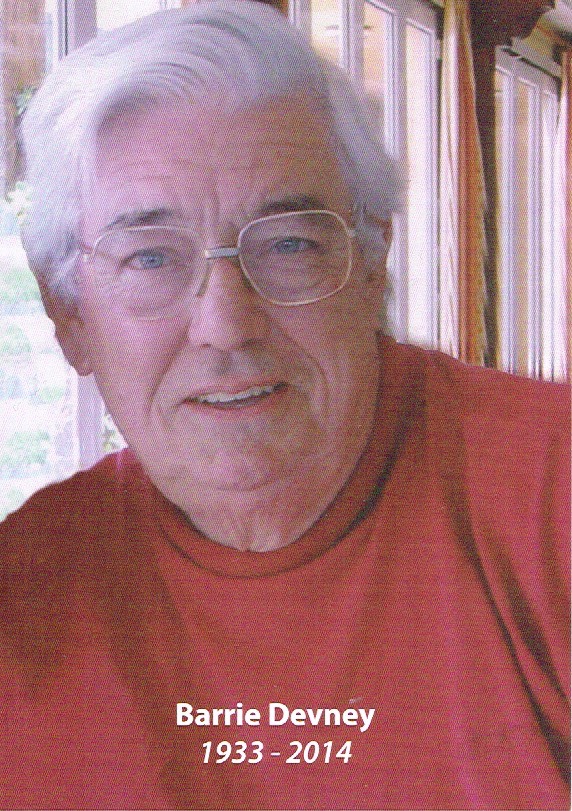
ASHLEY WALTON reports on the memorial service for Barrie Devney, former Industrial Editor of the Daily Express
Laughter, the vital ingredient of any Express Memorial, flooded St Bride’s Church in London’s Fleet Street.
This was not only a celebration of the rich life of a Fleet Street giant, but also of a decent hard-working man of integrity and humility.
The choir were laughing too as they whistled Eric Idle's Always Look on the Bright Side of Life, the perfect epitaph for Barrie Devney, the Daily Express's top Industrial Correspondent.
The Church was packed with hacks wearing bright yellow, a special request from Barrie's family who wanted the day to be bright and cheerful.
Paul Routledge, now the Mirror's political correspondent who worked with Barrie during the height of the 70s and 80s industrial turmoil, told how union leader Joe Gormley was not only one of Barrie's best contacts but also a close friend.
"Barrie was a constant source of good humour, " said Paul. He told the congregation that Barrie (a legend in our lunch times) was supping with Joe in a top restaurant when he received a call from the Express News Desk.
“We're told that Joe Gormley is in a particular restaurant having lunch with a fat man who is obviously a communist," said the man from the Desk. "You bloody idiot," replied Barrie. "That's me!"
Terry Pattinson, former industrial editor of the Daily Mirror, told the congregation: "Barrie was always having jokes at my expense just because I'm a bit short. He often carried a tin with him for me to stand on if I was making a speech."

He revealed how Barrie was put in charge of the mortal remains of Sir Trevor Evans, another of Fleet Street's industrial giants who died in 1981.
He expected Trevor's remains to be in an urn but they arrived in a battered shoe box which remained for some time in Barrie's desk. A date was fixed for Fleet Street finest industrial hacks to dispose of Sir Trevor's remains with all due dignity. The plan was to scatter them in Lincoln's Inn Fields, a spot Trevor loved.
"As the party left the Express Barrie realised the box was splitting and Trevor was leaking out and down the front of Barrie's suit," said Terry.
There followed the joyous sight of a bunch of portly middle-aged men jogging towards the Fields desperately trying to reach them before Sir Trevor disappeared.
"By the time they reached the Fields the box was empty and Sir Trevor was all down Fleet Street," said Terry.
Barrie was a great fan of Mansfield Football Club. His favourite line on his not-very-good side was: "Mansfield are going to have a good day today. Why? Because they are not playing."
Barrie's son Chris, who attended the service with his sister Sue, said: My Dad was a big character, he was no good with a paint brush or a lawn mower and with no airs or graces. To us he was simply Dad."
He told how for his Army passing-out parade Barrie turned up late, as usual wearing a cream Burberry coat stuffed with notebooks, covered with biro stains and scattered with fag ash.
At the cookhouse bash which followed the three-star General who was in charge of 20,000 men wandered over to Barrie. He looked him up and down and then said sarcastically: "So what do we do for a living?"
Barrie drew himself up to his full height and held out his hand: "I'm Barrie Devney of the Daily Express." The room fell silent. The General, now firmly in his place said meekly: "Can I get you a cup of tea?"
"This was my Dad's style," said Chris. “He was a decent, hard-working man who never forgot where he came from.
“Barrie Devney, Dad, a truly singular man."
The laughter continued into The Punch Tavern where a glass or five were raised to Barrie's memory.
*Lord Drone spotted the following at the memorial service; they are, in no particular order: Jeremy Gates, Peter Hitchens, Alan Cochrane, Clare Dover, Esther Harrod, Maurice Hibberd, Jim Davies, Jim Watson, David Wooding, Michael Watts, Roger Watkins, Richard Dismore, Terry Manners, Ashley Walton, Alan Frame, Alastair McIntyre, David Eliades, Leon Symons and Paul Wilenius.
Alan Cochrane’s tribute in the Daily Telegraph
An inspiration to Fleet Street’s big names

How to fail an interview and still get the job
By CLARE DOVER, former Daily Express Medical Correspondent
The short version is that all I had to do was to pick up the phone and walk next door from the Daily Telegraph to the Daily Express. This spanned four months, with an awful lot of nothing in the gap while waiting for Editor Roy Wright to get round to interviewing me.
Health Correspondent James Wilkinson had gone to the BBC, so I rang Tom Brown on the News Desk and said I wanted to jump ship. “Great, I’ll tell Arliss ...Yes, we want you, but you will have to be interviewed by the Editor.” A sum was mentioned, in the region of double that on the Telegraph, where they took the view that young ladies worked for pin money.

The big wait began. News Editor Arliss Rhind, pictured left, became fed up with having no one covering health and told Roy Wright I was having second thoughts and wanted more money. “Offer her more,” Wright told him. This was repeated one more time, with the price of jam tomorrow rising once again, while I obsessed about whether this was pricing me out of the market.
Eventually, I was called for interview, but I do not think Wright knew I was coming. “Who are you? Why are you here?” The tone was that of someone encountering an interloper.
Having decided not to call security, he relaxed a little asked what I was doing now. I told him about the Daily Telegraph and Wright said he never read it. “Well, you should do. It is a jolly good newspaper,” I snapped.
Changing the subject, he asked: “Date of birth, education”. I started telling him about university, but he interrupted, “no, no, tell me about your education”, looking happy for the first time when I started talking about Church Walk Infant School, Ulverston, Cumbria.
The pen slipped out of his hand and started rolling across the floor, with Wright chasing it on all fours, and getting down on his knees to scrabble for it as it rolled under his desk. I got the giggles. Wright glared. End of awful interview.
Arliss told me not to worry as now that I had seen Wright, everything could go ahead.
Drone note: Roy Wright was fired as editor shortly after Trafalgar House bought the paper in 1977.
A whale of a time at university

A job on the Express? I nearly turned it down
By ALASTAIR McINTYRE
I never really intended to get a job on the Daily Express, in fact I had tried in a half-hearted way to avoid it. But money talks.
It was 1974 and I was a sub-editor on the day staff of the Press Association. One lunchtime, with nothing better to do, I picked up a copy of UK Press Gazette and perused the Sits Vac pages which in those days were filled with jobs. I had been on PA for just over a year so it was clearly time to move on. Have pen, will travel and all that.
My eyes alighted on the following advertisement, which read: ‘National newspaper requires a news sub-editor, apply to Box Number xxx.’
I hadn’t a clue which newspaper was advertising but the following morning I strolled up Fleet Street and delivered my letter of application to the UKPG offices in Chancery Lane. I thought very little more of it until the phone rang that afternoon. I was flabbergasted to hear the voice of Morris Benett, managing editor of the Daily Express, inviting me for an interview. ‘When can you pop over,’ asked Morris – the Express was directly opposite the PA building in Fleet Street. ‘Can you make it this afternoon?’
I popped over and so it was that I found myself in the offices of the Daily Express, the last paper in the world that I ever thought would employ me, limp-wrested Liberal that I was in those days. A brief chat with Morris followed, during which he asked daft questions like where I had been for my holiday and whether or not I was married.

McIntyre at work on the Express in 1976, cigar and crossword at the ready. Barry Hibbitt dozes off in the background
We got on quite well and after about 10 minutes he asked me: ‘So when can you start?’
Surprised at the job offer coming so swiftly, I replied with alarming honesty: ‘Well I’m not really sure I want to work for the Express.’
Morris was taken aback. ‘Well do you want the job or not?’ he asked.
A brief period of agonising indecision followed but, after reflecting on the riches it might bring, I accepted.
The Express was short of staff because, in the fine tradition of Fleet Street, Beaverbrook Newspapers had launched a cost-cutting operation and offered all their highest-paid subs generous redundancy payments. Newspapers were thriving in those days so the offers were taken with alacrity and the staff went off to high-paid jobs on other newspapers.
Thanks to Ray King, an Express sub whom I had first met when we were both working on the Slough Evening Mail, I knew how much to ask for as my starting salary. I requested £90 a week, stressing that I now had two daughters, Jane, then four, and Sarah, two. Morris looked shocked.
‘We can’t possibly pay you that much old son,’ he said, ‘how about £84?’ As I was earning only £66 a week at PA I accepted with a feigned reluctance in the best traditions of Fleet Street.
When I joined the Express a month later I discovered the staff had received a monster pay rise and my starting pay was in fact £96 a week. Not only that but there were expenses. The company paid our phone bill, gave us a newspaper allowance and even allowed us to claim for late meals twice a week – the hours for a normal subbing shift were 3.30pm to 11.30pm or 5.30pm to 1.30am. These hours included a break, or drinks interval, which was as long as you could possibly make it.
As I said, money talks, and in those days of high inflation the pay kept rising without too much effort on my part.
Reader, I stayed for more than 32 years … until the management paid me a healthy sum to go away. I went with a song in my heart and many happy memories of the last great days of Fleet Street.

Pubs, punch-ups and pay-offs: Glasgow in the 1970s
BILL WHEELER recalls an English invasion of the Scottish Daily Express

It was with some trepidation that I stepped onto the editorial floor of the once mighty Scottish Daily Express in Albion Street, Glasgow, for my first working day in August 1973.
It was the third of Beaverbrook's "black plastic" newspaper offices. The Scottish operation had been pouring out newspapers since 1928. The editorial floor was an imposing sight ... a cavernous room compared with the rabbit hutch I was used to at the Evening Post in Bristol and the proceedings were dominated by the booming voices of executives I did not fancy getting the wrong side of.
In fact they turned out to be a decent crowd in the main. The real problem initially was racial prejudice from the native Scottish subs. Some made it quite clear "we do nae like they effin' English". About six new English subs all turned up at the same time and were stuck on the same green lino-topped desk which the Scots referred to as Little England.
"Do you all know each other," I was asked by one hostile Scot. "No," I replied, pointing out we came from newspapers as far apart as Newcastle, Manchester and Bristol. "Why do you ask?" "Because you all speak the same," came the retort.
With the "genius" peculiar to Beaverbrook management there had been a generous, non-selective redundo scheme. Many of the best Glasgow Express subs had grabbed the money and walked into good jobs elsewhere, leaving very few people to put the paper out. Hence the influx from England.
Initially there was a lot of glowering and muttering from the hostiles who seemed to want to re-fight Culloden and re-run the 1966 World Cup. The cup, one of them explained to me one night, should have really gone to Scotland because Scotland had beaten England the year after the World Cup Final! Don't ask. I did not understand the logic of that either but decided to let the remark go.
After a few weeks the friction eased and GX was a good place to work although you had to be careful not to upset the copy boys. They would fetch teas and sandwiches mad with square slabs of sausage meat. We were warned early on not to upset this rough looking crew, who were summoned to pass subbed copy to the chief sub by shouting “boy”. They were rumoured to spit on your food and tea if they did not like you.
One night the copy boy was waiting with a knife for the sub
The new English arrivals never stood a chance. One sub was said to have upset a copy boy so badly that the lad was waiting for him with a knife as the wordsmith arrived home late one night. True or false, I took to getting my own tea!
Despite Glasgow's fearsome reputation in the 1970s I grew to love the country and its people. In the main they were warm, generous, never afraid to speak their minds and good company.
Journalism in Glasgow had a raw edge to it seldom experienced in the leafy cities of England. Stories of punch-ups on court house steps between rival reporters and photographers chasing buy-ups were legion. True or false they made great pub stories that enhanced Glasgow's reputation as a tough place to learn your craft.
I was told that one beefy Express reporter went to interview a man in a tenement building. All went well but the man refused to have his picture taken. "Now look," snarled the reporter, "my photographer has come a long way to take yer effin' picture so don't move". He was reputed to have grabbed the man by the throat and held him against the wall while his picture was taken.
The Press Council, its successors and modern journalism lecturers in ethics might have struggled with that one. Competition was fierce in Glasgow. The "purists" might have struggled with another story I heard.
Floods had swept the Highlands and stags were reported to have drowned in a Ganges of gunge. A photographer (I’m not sure which paper he worked for) was despatched but reported: "There's nae any effin' drowned stags and nae much effin' flood water either." "Well find some," barked the picture desk, slamming the phone down.
Off went the snapper, found a stag's head mounted on a piece of wood in a pub and borrowed it. He is then reputed to have set it up in a deep puddle, lay next to it with his camera and hey presto Stag horror in the Highlands. Rival snappers no doubt struggled to explain not finding dead stags all over the Highlands. I don't know if the story is true but why let the facts spoil it!
Despite the turmoil the Scottish Express sold 560,000 copies a day
Then there was the Glasgow Express NUJ chapel. It was dominated by a handful of lefties who made Trotsky look like a Young Conservative and Fleet Street printers seem like pussy cats. This was Red Clydeside in 1973 and the general mood of the area pervaded the editorial floor. After the Express's Albion Street operation closed I read that there had been 52 disruptive stoppages of work in the previous 12 months of production. One a week! Some printers blamed the NUJ for costing them their jobs. That has to be a first.
I remember standing at one tetchy meeting as we demanded a Christmas present from the management. Quite right too. They offered £50. "Are they going to pay they bloody income tax?" shouted a voice from the back of the meeting.
But the chapel could be manipulated, if you believed the Glasgow rumour factory. As I said, why let the facts spoil a good story.
One former editor, hoping for a pay-off, is reputed to have "accidentally" dropped a memo outlining his future staffing plans and his ideas on redundo. No doubt the head bolshies were top of the list with pay-offs kept to a minimum. Uproar. The chapel stopped work demanding the editor's head. He duly left with a huge cheque, bought the sailing boat of his dreams and called it The Golden Handshake! Game set and match to the editor.
Despite all the turmoil the Scottish Daily Express sold 560,000 copies a day out of Glasgow and it was a cracking paper with a reputation for getting the best stories first and being a training ground for other parts of ther Beaverbrook empire. The Albion Street team was convinced their Express was far better than anything "they fancy Dans in London and Manchester could produce". "Absolutely. Couldn't agree more," was the wisest response in the home of the Glasgow kiss.
But not everything went smoothly. One memorable night involved the tracking down of Ronald Biggs. A code had been posted to Glasgow and put in a safe. So when the full story came up by teleprinter the splash sub had to replace Brighton with Brazil and Clacton with Copacabana, or something like that. Simple, except the keys to the safe could not be found. The editor or one of his sidekicks was reputed to have phoned London for the code. He was told to go forth and multiply "because we know you are from the Daily Mail". Everyone knew the Express had a belter but not the details. Somehow the problem was solved.
Come Day Two and Biggs was all over the front page again in London and Manchester. But not in Glasgow. The IRA's M62 coach bomb had gone off killing 12 people. Glasgow splashed the bomb and had Biggs was a big second item. The deputy editor was reckoned to have made the decision. "Great decision," he was told from on high, "when did London decide to change the splash?" "They didn't," came the deputy's reply. Stunned silence. A very brave decision if the story is true. Alex Salmond did not invent the idea of Scottish independence, that's for sure.

The pub next door to office was embroiled in Scottish Express folklore. McEntee's bar, pictured right, was part of a huge three- or four-storey tenement building. The tenement flats had been demolished but McEntee's still stood there on its own, shrouded in a tarpaulin to keep the rain out. At 9pm sharp the Express editorial floor emptied and dozens poured into the bar for large whiskies (a much bigger measure than in England) and half of heavy (bitter to you and me).
If someone was wanted back in the office there was a phone on a small shelf just inside the door. It was an internal Express extension and someone had bashed a hole in the wall with a hammer and chisel so that a cable could be fed through from the switch board. Explain that to modern HR people.
When Albion Street closed (and that is another story I remember well. I was there that night) a workers' co-operative alternative was set up.The owner of the bar was reputed to have poured several thousand pounds into the project, pretty sure he would get it back by the end of the first week.
In 1973 pubs in Scotland had to close at 10pm but the Express staff could shift enough booze in that last hour to qualify for a national drinking team if there had been one. Oddly, pubs were not allowed to open on Sundays. And ladies who frequented public bars were definitely not ladies!
Today Glasgow is still one of my favourite cities but now has hundreds of sophisticated wine bars and restaurants. Women are welcome. An incredible culture change that emerged in less than 20 years.
*Anyone wanting to read the definitive story of the Scottish Daily Express will enjoy A Word for Scotland (Luath Press), the masterly story of the newspaper by the late Jack Campbell. A man of outstanding judgment – he gave a me my first job on a national – he rose from copy boy to managing editor during a 49-year career. His research is meticulous and his love of Beaverbrook's pet project shines through. It is available in paperback from Amazon HERE

How I doubled my money in Glasgow and quit

MEMORIES: The Express building in Glasgow is no longer occupied by the newspaper
By BILL WHEELER
When it came to job interviews the Glasgow office, outpost of the Express empire, did it with style. I had seen the paper during a memorable holiday touring the Highlands in my Triumph Spitfire with tent strapped to the boot lid. Well, I only earned £35 a week as a features sub on the Bristol Evening Post. Gordon Farnsworth, the Post editor will be remembered for a lot of things but excessive generosity is not one of them.
Anyway, a few weeks later an advert appeared for sub-editors on the Scottish Daily Express and I posted a letter off to the managing editor, Jack Campbell. I was only 24 and did not hold out much hope as I had only been subbing for six months.
Nothing happened for a couple of weeks and then one wet Monday afternoon the phone rang in the features department of the Post. "Mr Wheeler?" a Scottish voice inquired. "Jack Campbell here, managing editor of the Scottish Daily Express. Could you pop in and see me on Wednesday at 2.00pm?" he asked as if he were on the next floor. He was 500 miles away and the train journey there and back would have taken two days!
"Sorry, I can't. I can't get the day off," I said. "I can get Thursday off although I shall have to fly." No problem, just bring the ticket receipt, I was told. These were the days when newspapers paid your expenses for interviews. And I was off by bus, train and plane from Heathrow at the crack of dawn, having blown my meagre cash reserves (the flight cost £27).
I duly presented myself in Jack Campbell's office at 2pm on the dot which seemed to impress him. Right, he said, let's sort out your expenses. First item on the agenda! I presented the flight receipt, apologising for the cost but he never raised an eyebrow.
"You will have caught a taxi," he said. "Well, I caught the b..," I mumbled. "Say £5," he said. "And the same back to the airport. Lunch and dinner a fiver each? Shall we call it £50?" he said as I tried to mumble that I had brought sandwiches.
A messenger was summoned and I was taken to the cashiers and a pile of Scottish blueys were counted into my hand. This was in August 1973 and my net wage was less than £30 a week! It was like winning the pools.

Four years before I was lucky to clear £15 as a trainee reporter. After a couple of questions about my fledgling career the charming Mr Campbell said: "Would you consider joining us for £65 a week?” You try to bloody stop me, I thought! "Most acceptable," I said, still not sure if he was offering me a job. And off I went for the long trek home and two large G&Ts on the way, paid for with a Scottish bluey. Two days later a letter arrived "confirming my offer of a job at £67 a week”.
So I had got the job. Eureka! It all seemed too good to be true ... and, of course, it was. Seven months later, in the midst of a financial crisis (surprise, surprise), the Beaverbrook operation in Albion Street, Glasgow, closed and the Scottish Daily Express was produced in Manchester for the next 20 years.
The Scottish edition of the paper sold 560,000 copies a day and the fiercely independent Glaswegians were in no doubt their publication was better than anything London and Manchester could produce.
The Glasgow NUJ chapel was fearsome. I read afterwards that the paper had suffered 52 stoppages of work in the last 12 months of Glasgow production. The last edition never reached the streets because a story by the unions' "Action Committee" condemning the management and promising a new paper run by former Beaverbrook employees was slipped into Page One.
The presses were stopped. I managed to grab one of the few copies of that final edition that were printed along with a proof of the last Page One. I nearly got beaten up in the press hall. Some printers blamed the journalists for the closure. I still have the paper and the proof.
That day - March 30, 1974 - was one of the saddest I can recall in a 46-year career. Twenty one years later, after a journey through the West Midlands, the News of the World, The Sun and the Express in London, I found myself back in Glasgow briefly as chief sub, along with Terry Manners, Ken Parker, Rod Jones and Wendy Fuller helping to relaunch production in Glasgow. The first paper was off stone as scheduled at 9.30 on the dot. A night to remember.

Phil Finn’s cancer fight

ACE newsman Philip Finn, former New York reporter for the Daily Express, has died from cancer of the oesophagus. This is how he explained his illness in an email to his friends last March.
Hi Family, Friends,
Sorry for the delay in responding to all your kind messages. There are enough cards, prayers and lit candles to burn down the Vatican. And that's great because it's gratifying so many people not only care but are pulling for us
Our backup is global. James and Kathy Colquhoun (Ann Marie's brother, sister in law) and son Gary top our Scottish supporters'club, and near Royal Troon on the West Coast our oldest friends, The Gilfeathers, are just as hearty, along with daughter Jo in Paris.
Jimmy Sutherland in Barcelona has put us first, even ahead of Lionel Messi. And in South East France we have David and Jan Richardson toasting us (on a daily basis) in locally produced red wine. And mention of wine brings us to our old Manhattan mucker, Allan Hall, now earning his Euros in Berlin.
Words of great comfort and advice, too, from Mick and Lilly Brennan in San Jose, Costa Rica. And down in the Caribbean we have George and Margot Gordon sending us calypso greetings from Antigua.
South of the border in the Mexican zillionaires' playground of Cabo, Ed Diddle interrupts the sweet life to call daily. Old mates from all over Britain have sent our spirits soaring.
Now to business: We are in the second week of radiation treatment, getting zapped once a day five days a week. It is tiring, but painless and only takes a few minutes. Had the first chemo treatment last Thursday, a two-and-a-half hour session at a brand new facility round the corner from our golf club.
As one who has imbibed from as far afield as Salford to Santiago (and multiple other places East and West) it was a vastly new experience ... chemo is not Heineken, and it certainly ain't Boddingtons. It left me Saturday and Sunday in a very weird state. But we believe in the old bromide: We are only doing it for your benefit. Right!
There is another long session tomorrow (Wednesday, Jan 21), and it is not the kind of happening which preceded so many happy hours spent in the Lando, Crown and Kettle (Ancoats, Manchester), Eamonn's or dear old Costello's, off Third Avenue.
It is a tough regimen, but so was being bombed by the Germans, and we came through all that with colours blazing.
That's why all your warm thoughts, messages are so greatly appreciated. And another great plus for us was bolstering our friendship with Patty McAleece, a volunteer at the Oncology Centre, whose care and concern, makes us even more envious of that lucky old sod, husband Jerry.
We can just hear our old foreign editor, David Richardson, muttering to Jan: "Is there much more of this crap?"
No there isn't.
But we hope we've got the message across how deeply we feel and appreciate all your tremendous support. And to Jack Mullins: Your Dear Abby gag had us howling with laughter.
Love all round,
Ann Marie and Phil Finn, jr., aka Lord Ace.
I’m a transvestite, jokes Lord Ace
_________
Obituaries
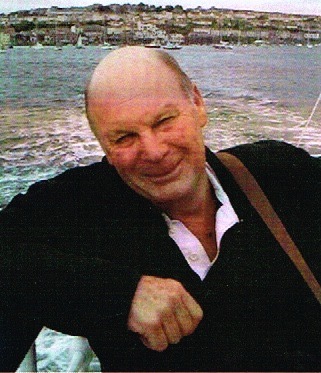
Simon Crookshank
ONE of Fleet Street's greatest characters, super sub and all-round good guy Simon Crookshank died on 19th January after losing his brave battle against cancer. He was 66.
The Drone's exclusive report of the funeral can be found here
___________________________________________________________________________________

Bill O'Hagan
Sausage king Bill O'Hagan, former night news editor of the Daily Telegraph and one of Fleet Street's most colourful characters, has died of cancer at the age of 68. What is not widely known is that he was born Bill Bastard and, for reasons best known to himself, adopted his mother's maiden name.
Tribute from The Times
____________________________________________________________________________________
Bob Kilbey
The Drone is sad to report the death of another valued friend and colleague. Bob Kilbey, a Daily Express sub-editor in the 1960s and 70s and a former BBC Radio Two disc jockey, has died at the age of 68.
He leaves a partner, Patricia and son Kevin.
Ashley Walton's funeral report
___________________________________________________________________________________

James Sillavan
Cartoonist James Sillavan, who worked on the Daily Express art desk from 1980 until 1987, has died suddenly and unexpectedly of a heart attack at the age of 63.
A memorial service to commemorate the life of James will be held in three months time in the City of London.
____________________________________________________________________________________

Brian Hitchen
FORMER Sunday Express editor Brian Hitchen and his wife Nelli have been killed after being hit by a car near their holiday home in Altea, Spain.
They had parked their car and were crossing the road to meet friends for dinner when they were hit.
Nelli died instantly and Brian was was taken to hospital, but died from his injuries after surgery and being placed in a medically-induced coma.
Hitchen, aged 77, was editor of the Daily Star from 1987 to 1994 and then moved to edit its sister publication, the Sunday Express for a year. After leaving the group, he set up his own media company.
EXCLUSIVE: Brian’s last poignant email
Editors past and present attended the memorial service for Brian Hitchen at St Bride’s Church, London, on 8th May, 2014.
Order of service
____________________________________________________________________________________
Brain Cashinella
Former DAILY EXPRESS News Desk man Brian Cashinella has died from lung cancer after several months of illness. He was 75.
He started his career at the Manchester Evening News before graduating to the Daily Telegraph in Fleet Street and then The Times.
He later joined the News Desk team at the Express under news editor Arliss Rhind.
Brian died at his home in Kenley, Surrey, on Wednesday, 5th November. He is survived by wife, Pat, daughters Alison and Elizabeth, sons Damien and Julian and eight grandchildren.
Pat said that on the day Brian died he and the local priest had an animated hour-long discussion about their favourite football team, Manchester United. Five minutes after the priest left Brian died.
____________________________________________________________________________________

Barrie Devney
The Daily Drone is sad to report the death of Barrie Devney, former industrial editor of the Daily Express, who passed away peacefully on 30th December, 2014 at the age of 81.
Barrie’s son Chris said: 'Dad will be bloody annoyed at the fact that he once wrote a fitting obituary for Arthur Scargill, and that he was rather hoping that he'd get to publish that first!’
A successful and fun-filled memorial service was held for Barrie Devney, former industrial editor of the Daily Express, at St Bride’s Church, Fleet Street on Tuesday.
It was attended by more than 60 people who later adjourned to the adjacent Punch Tavern for lunch.
TERRY PATTINSON remembers his old friend
Barrie was an inspiration to the big names, says CLARE DOVER
My friend and deadly rival by JAMES DAVIES
____________________________________________________________________________________
Dan Macdonald
Veteran Daily Express news sub-editor Dan MacDonald has died at the age of 88.
TERRY MANNERS reports from a moving funeral
____________________________________________________________________________________
Colin Pratt
Daily Express regional reporter Colin Pratt has died at his home in Pezenas, southern France after a long illness. He was 76.
Friend and former colleague Tom Brown said: 'Colin was the best, kindest and most loyal of colleagues. He and Angie kept open house and were always warm and welcoming. Like many others, I feel a real sense of personal loss.'
___________________________________________________________________________________
Chris Evenden
Former Daily Express news sub Chris Evenden died on Friday 5th September, 2014. After leaving the Express in the mid-1970s for a job with the Ford Motor Company, he later became Chief Sub of The People.
___________________________________________________________________________________
Dennis Griffiths
Dennis Griffiths, former production director of the Evening Standard and research and development director with Express Newspapers, died on Christmas Eve aged 82.
____________________________________________________________________________________
Roy Eves
Roy Eves, former deputy features editor of the Daily Express in Manchester, died peacefully in hospital on 18th September aged 83.
Roy, who had four grandchildren, was an active union member, Liverpool football fan and a crown green bowler.
His colleague Roger Watkins recalled: ‘Roy was a great character, known, among other things, for celebrating a nice drink after the first edition had gone by standing on a bar stool and stripping while singing "Have you seen the Muffin Man?" with a full pint balanced on his head. Talk about flooding the bar!’
____________________________________________________________________________________
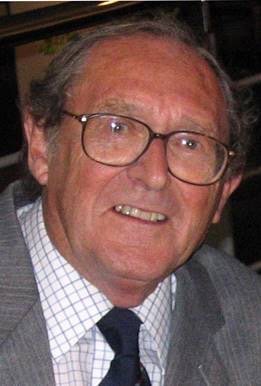
Alan “Bacca’ Baxter
One of the great characters of the Daily Express, North East district reporter Alan ‘Bacca’ Baxter, has died at the age of 82.
Bill Hunter reports on a poignant deathbed scene which ‘will join the best of journalism’s foklore’. PLUS tributes from colleagues
____________________________________________________________________________________
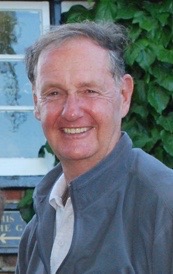
Bill ‘Didge’ Reynolds
The Drone is very sad to report that former Daily Express News Sub Editor Bill ‘Didge’ Reynolds died on 30 August. He was 73.
Bill, who had bravely fought cancer for the past year, had been in a weakened state and fell downstairs after getting out of bed at his home in Buckhurst Hill, Essex.
He died after being taken to the London Hospital in Whitechapel.
Didge, pictured above in 2010 on one of his beloved country walks, was a wonderful man who was much loved by everyone who knew him.
Among the huge turnout for the funeral, held on 15th September in Hainault, Essex, were many old Fleet Street hands.
Roy Greenslade has written a lovely tribute to Bill in The Guardian HERE
FUNERAL REPORT: FAREWELL DIDGE
____________________________________________________________________________________
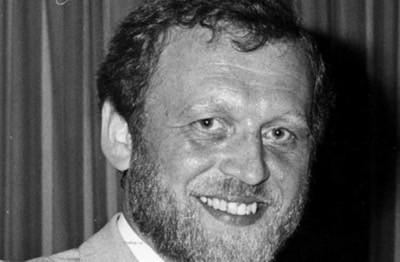
Rod Kiddell
Rod Kiddell, who quit as editor of the East Anglian Daily Times and joined the Daily Express as a freelance news sub in 1988, has died at the age of 72
____________________________________________________________________________________

Kingsley Squire
Former Daily Express reporter Kingsley Squire died in November 2015 after being diagnosed with pancreatic cancer in July. Kingsley, pictured with his wife Monica, is said to have had a 'wonderful, peaceful death surrounded by his family'. He was 78.
The funeral was held on 11th December. Donations can be made to Sidmouth Hospiscare and Sidmouth RNLI care of Potbury’s Funeral Directors, 111 High St, Sidmouth EX10 8LB.
CLARE DOVER, who worked with Kingsley on the Express in London, had made elaborate arrangements to attend the funeral in Devon. But her plans went slightly awry.
She explained: "The best laid plans, and all that … Jill King and I had made elaborate plans to go to Kingsley's funeral together, with me getting up in Manor Park, East London, at the unearthly hour of 4.15 am to get Tubes and train to meet up at Hildenborough, Kent, the nearest station to Jill's home, for the drive to Devon in Jill's car.
"Map reading had been promised. I had set two alarm clocks, to be doubly certain of waking - and managed to sleep through them both, awaking just in time to stop Jill from heading to the station. She promised to tell me all about it. So here I am, at home, toasting Kingsley with port and mince pies and holding a solo wake. R.I.P. Kingsley."
Kingsley’s colleague JAMES DAVIES told the Drone: ‘Kingsley was truly one of the good guys.
'Whenever you had a job in Birmingham you were guaranteed a warm welcome. So warm, in fact, that on one spectacularly bibulous occasion I missed the last train back to London and was smuggled into the Squire household where all were abed, well past midnight, and given sanctuary on Kingsley's sofa.
'I was awakened at dawn by his youngest running into the lounge and screaming: "Mummy there's a man in our house”.
'Hungover, unwashed and unshaven, I found myself trying to explain to Monica the circumstances of my unwarranted arrival. As I remember she coped magnificently – testimony to the training of most journalists' wives!
'I used to tell Kingsley that the older he got the more he resembled John the Baptist. His powerful response to pancreatic cancer was admirably biblical.’
NEW A great journalist in the Crusader tradition – Jill King’s tribute
Kingsley sings What a Wonderful World
___________________________________________________________________________________
Jack Warden
The former political editor of the Daily Express, died on 23rd July, 2015, at the age of 87.
He was a political correspondent on the Herald in Scotland before being hired by Express editor Alastair Burnet in 1975. He stayed with the paper until the mid-1980s.
Jack leaves a daughter, Anne and a son, John. He was married twice, his wives Harriet and Marion having predeceased him.
He was always known as Jack but was bylined as John Warden because his mother considered the name Jack vulgar.
________________________________________________________________________________________________________________
Vic Mayhew
Former night editor of The Sun Vic Mayhew died on June 18th, 2015, aged 77.
Roy Greenslade has written an excellent tribute in the Guardian which may be viewed HERE
One-time Expressman Jon Zackon, who worked with Vic on The Sun, has written this hilarious anecdote:
____________________________________________________________________________________
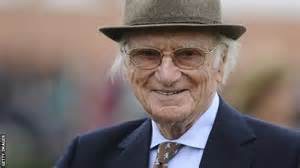
Sir Peter O’Sullevan
Celebrated Daily Express horse racing correspondent Sir Peter O’Sullevan died on July 29 at the age of 97.
Sir Peter, who was also a famed TV commentator for the BBC, worked for the Express for 36 years. He died at his London home after a long illness.
He was involved in some of the earliest television commentaries on any sport in the late 1940s and also did many radio commentaries in his earlier years.
The Daily Telegraph obituary said: 'Following the death in 1964 of the Express’s proprietor Lord Beaverbrook, there were significant changes at the newspaper. Few were to O’Sullevan’s liking, and in July 1973, after a new sports editor had altered his copy and deleted two paragraphs, he resigned and tentatively accepted an offer from the Daily Mail.
But the new owner of the Express, Sir Max Aitken, persuaded him to withdraw his resignation after raising his salary from £5,500 to £9,000 a year and offering other concessions. O’Sullevan continued to write for the Daily Express until January 1985.
____________________________________________________________________________________

Keith Rowley
Daily Star backbencher Keith Rowley died of a heart attack at home on May 19, 2015. He was just 56.
Keith, who had been working the day before, leaves a wife, three children and a grand-daughter.
________________________________________________________________________________________________________________

Terry Evans
One of the kindest and most-respected Fleet Street journalists, Terry Evans, died suddenly of a pulmonary embolism on April 7, 2015, aged 69.
Terry, who retired as picture editor of the Sunday Express in September 2012, served on the Daily and Sunday Express for 39 years.
Colleague Alan Frame said: 'Those lucky enough to have known Terry Evans and work with him at the Express (both Daily and Sunday) in the good and not-so-good times, will agree that he was clever, resourceful, incredibly hard-working and, damn it, just plain decent without a hint of malice.
'He was simply the best and those lucky enough to have been his friend (we are a very large community) are sad beyond words because the end came without any warning.
'Our deepest sympathies to Christine and Jonathan and the extended family.’
Devoted widow Christine’s brave eulogy at funeral
The nicest bloke in Fleet Street, a tribute by Richard Dismore
The man who changed my life, by Stephen Wood
John Knill pays tribute to a class act
____________________________________________________________________________________
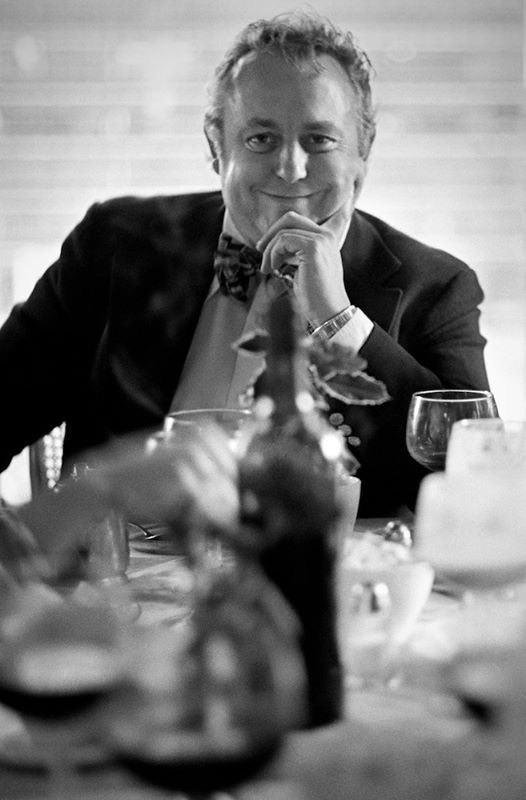
Bon viveur Finn in his prime Picture by DEREK HUDSON
Philip Finn
Former Expressman Philip Finn has died after a courageous battle against cancer. He was 79.
Phil, who ran the Express New York office for many years, lost his fight for life on Monday, May 4, 2014, a few hours after being discharged from hospital to spend his remaining days at home in Aiken, South Carolina.
His wife Ann Marie, who was at Phil’s side when he died, had earlier written in an email to friends: "Hi, very sad news. Phil has been released from hospital. He is coming home to hospice [care]. He had a procedure to take fluid off his lung. Well we have been told the results. The cancer is in his blood and his fluids. So Phil is coming home to be with me and his dogs. We will keep him comfortable.
"He wants to come home. He knows what to expect and he is at peace with it. We have a wonderful marriage and have had so much fun. I don't know how to end this note but to say. We love you all. Cheers AM.”
Former New York-based snapper Derek Hudson said:
"Philip Finn was, as described by my dear friend Michael Brennan, an 'Ace Reporter' with whom I had the unique privilege to work alongside early in my career based in New York.
"What I didn't learn from my compatriot Phil wasn't worth knowing. His infectious laughter was only matched by his unrivalled skills at getting THE story before his peers had opened an eyelid.
Phil pulled off more World Exclusives than was decent in a lifetime of reporting yet he took it all in his stride. A more fun-loving and generous man would be hard to find – always first to offer a drink at the bar or invite you home for a fine wine dinner.
"From the day we met he proffered his friendship and I took it very seriously making my 10-year tenure in NYC nothing but an immeasurable pleasure.
"All of us who had the good fortune to know Phil will know just how lovely a husband he was to his Scots wife Ann Marie to whom I offer sincere condolences.
"Goodbye Phil! Thank you for everything good buddy.”
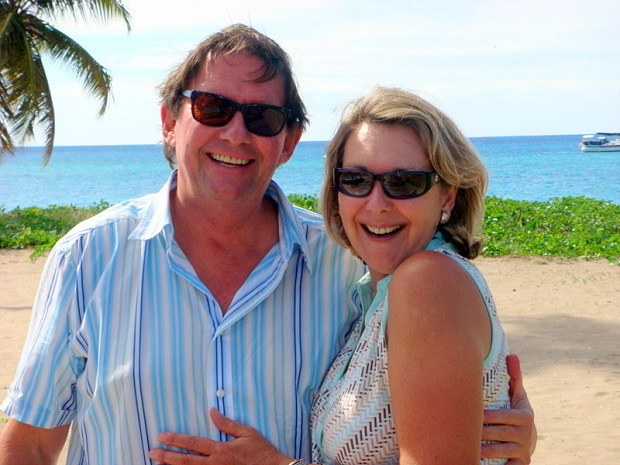
CANCER FIGHT: Lord with his wife Juliet
Graham Lord
Renowned author Graham Lord, former Literary Editor of the Sunday Express, has died at the age of 72.
He had been ill with cancer for the past year and died on 13th June. His wife Juliet, an artist, was by his side.
Lord had been expected to succeed Sir John Junor as editor of the Sunday Express, until JJ sabotaged his chances.
He subsequently wrote an unflattering portrait about Junor in his book Lord’s Ladies and Gentlemen: 100 Legends of the 20th Century which can be read here.
Lord was born in 1943 in Southern Rhodesia, now Zimbabwe, and schooled there although his childhood home was in Portuguese Mozambique. He took an honours degree in History at Cambridge, edited the university newspaper Varsity and joined the Sunday Express in London in 1965, where he spent 27 years, 23 of them as Literary Editor, writing a weekly column about books and interviewing almost every major English language author of the 1960s to 1990s, from P G Wodehouse and Graham Greene to Muriel Spark and Ruth Rendell.
In 1987 he launched the £20,000 Sunday Express Book of the Year Award and after leaving the paper in 1992 wrote regular literary, travel and opinion pieces for the Daily Telegraph, The Times and the Daily Mail.
From 1994 to 1996 he edited the short story magazine Raconteur.
Lord’s latest novel, Under a Hammock Moon, is a comic love/adventure story set on a small Caribbean island similar to the one where he lived with his Juliet. They also shared a house in the South of France and an apartment in London.
He leaves two daughters and two grandchildren in their 20s. Juliet has a son, a daughter and five grandchildren.
___________________________________________________________________________________

Sir Jocelyn Stevens
He was famed for once throwing a typewriter out of a window, but now the man they named Piranha Teeth is no more. Former managing director and deputy chairman of Express Newspapers Sir Jocelyn Stevens has died at the age of 82.
Hear the old rogue on Desert Island Discs
___________________________________________________________________________________

Chapman Pincher
Celebrated Daily Express reporter Harry Chapman Pincher has died at the age of 100. The journalist and author, who was the newspaper’s defence and science correspondent until his retirement in 1979, was known as “the great spycatcher of Fleet Street”.
Pincher's son, Michael Chapman Pincher, announced his father's death on his Facebook page. He said: "Our dad, Chapman Pincher (The Lone Wolf of Fleet Street) facing his death with: no regrets, no fear and no expectation, died of old age on 05 August 2014 aged hundred and a quarter.
“Harry, a journalist, author, fisherman, shot and scourge of politicians of all hues leaves Pat and Mick, a raft of grandchildren, his third wife Billiee and her three children. His last joke was 'Tell them I'm out of scoops.’
"For him RIP stands for Recycling-in-Progress."
___________________________________________________________________________________
+++++++
Roger Williams
Former editorial assistant Roger Williams has died aged 73.
Tony Langridge, who once worked on the Daily Express Picture Desk, writes:
Roger, a distinctly recognisable figure in a black blazer and highly-polished handmade brogues, passed away on 15th February, 2015, finally succumbing to cancer.
Many colleagues will remember Roger surviving a horrendous fall from a fourth floor stairwell in the Fleet Street building. After several months recuperating he returned to serve on the editorial floor until his retirement in 2005, having completed 47 years service.
This gave him the opportunity to pursue further his all-consuming hobby cricket. As an avid Kent supporter he would travel the country in support of his team. He also enjoyed listening to classical music.
His funeral service took place at Eltham Crematorium on 18th March.
The family wishes to thank Peter Aldrich who arranged for a wreath to be sent on behalf of existing union members in the Chapel, who have fond memories of Roger.
____________________________________________________________________________________
The Editor will see you, er, later
ALAN FRAME remembers his successful interview for a job on the Daily Express in Manchester
Reading our great chum's account of his job interview with dear old Sammy Prince brought back similar, if slightly more alarming memories.
I had been alerted to a possible vacancy at the Express in Manchester by my chums Rory Crilly and Cy Jameson. We had worked together on the News Letter, the morning newspaper in Belfast where we had enjoyed a great time (including, by the way, being served our daily pints in the Duke of York pub next door by a very young Gerry Adams – pre-beard, beret and Armalite), and my friends had urged me to apply for a job.
Come the appointed day, I flew on the first plane from Aldergrove to Manchester and arrived at Ancoats, as instructed, at 10am to be interviewed by the Northern Editor John McDonald. I seem to remember I had bought a new suit for the purpose.
At 10.15 the Deputy Editor, the splendid Sammy Prince, told me that the Editor was running late and would need to hold conference before seeing me. Not a problem I said (well, I would wouldn’t I?), so I got stuck in to the rest of the morning papers and more coffee.
At noon Sammy apologised again to say that John McDonald was very sorry but that he was tied up with management meetings and would have to interview me later in the day. Would I care to go to lunch, asked Sammy, thrusting a few bob in my hand. Be back at 2.30.
Replete with Lancashire Hotpot and probably not a lot to drink (well, I had an editor to impress – little did I know), I arrived back on the dot.
The clock crept slowly round to 3, 3.30, 4, 4.30 by which time I was wondering if I’d make the last flight out and poor Sammy was running out of excuses, when suddenly the ever loyal deputy appeared to tell me that John would see me now but that I would have to make allowances because he had been having a difficult day, very busy, you know how it is son, blah, blah, blah...
Ushered in to an empty Editor’s office I took the seat I was shown by the secretary when another door opened and in burst John McDonald who fell (literally) into the chair beside me which, as luck would have it, was of the revolving variety. The force was clearly with him because round and round he went, his face flashing past me every second or so until momentum faded.
Then came the killer question: What makes you tick, son? From memory, I think I failed to reply (well, what would you have said?). Suffice it to say that this was the entirety of our meeting, except that such was the extent of John’s refreshments that day (actually a continuation of the previous evening), he offered me a salary of at least 50 per cent more that I had been told to expect.
Sammy apologised once more, I was thrilled (and a little bemused) and I caught the plane home. Happy days...or as far as John Mac was concerned, Happy Daze…
I’m a transvestite, jokes Philip Finn
This email was written last March by former Daily Express New York reporter Philip Finn, after being diagnosed with cancer of the oesophagus. Phil, who was known as Lord Ace, died on May 4, 2015, aged 79.

Subject: Lord Ace a transvestite – Whaaat?
Dear Family and Friends,
Nothing like a juicy tabloid headline to grab the eyeballs! But more on that in a moment.
This long, overdue update is by way of apology, and another expression of our huge gratitude to so many family and friends who have responded to our situation. The apology, an abject one, is because we haven't been reading emails until today when there were some 266 waiting, albeit half of them from Quackenbush. Alas we haven't got much of an excuse except there has been an awful lot happening in our lives.
But what a joy it has been to trawl through those e-mails from friends who have been more out of sight rather than out of mind.
Delighted Syd and Jackie Young are now approaching the 21st century and apparently have at last got a computer. Which is also great because we'd like to drop in on them some time in Bristol, and feel it would be more polite first to announce our pending arrival. Great to hear from you both!
Tom Brown, Scotland's master wordsmith, sends greetings that warms the cockles, and conveys salutations from Arliss Rhind and other old pals North of the Border.
From the West Country there are some amusing thoughts and encouragement from Jim and Pat Davies. John and June Smith messaged us from the high seas, crossing the Atlantic back to their lair in Florida. And Leo and Beth White were able to crank up their old machine to send similar tidings from Sale, no doubt wallowing in the resurrection of Manchester United.
We are being overwhelmed by kindness, cards galore, so many prayers we have applied for sainthoods
Stirring words, too, from just around the corner here in Aiken, from another old Doncaster pal, Terry Willows, and also his brother and sister in law back in Lincoln.
We are still being overwhelmed by kindness, cards galore, so many prayers we have applied for sainthoods, and George Roth even stumbled round with two armloads of Boddingtons, exciting thoughts of when we can properly attack them. Thank you George and Helen. We heard today Joe Dorrycott has quietly invested in some Irish beers so we can be ready for St. Patrick's Day.
Many other visitors, not least John Strode, now called Aquaman, squelched here after falling in the chilly lake on No.5 on the Cupp Course at Woodside Plantation, attempting what turned out to be an impossible shot to the green. We now hail him as golf's answer to Jacques Cousteau.
Every greeting comes heartfelt, and mean so much to us.
Now what's all this about Lord Ace being a transvestite? Let us explain. At the centre where we go for radiation, there is a quaint little shop called, 'Designed by Nature Boutique”. That sounds like a terrible misnomer, but the place stocks beautifully crafted, hand-made hand-fitted wigs, selling for $400.00 (about £250). And for one fleeting, we stress fleeting, moment Lord Ace just wondered … could he become Mrs Doubtfire with a 5 iron? Or with a nice blonde number and a bag of clubs could he be Tony Curtis chasing Marilyn Monroe in Some Like it Hot? A tight skirt, a whiff of make-up, and who knows Lydia Ko could have competition.
Well, we did stress it was just a fleeting moment. Clearly it would be terribly disrespectful, and what's more those guys in the ShhhhHeads we have been playing with daily for 16 years would not let anyone get away with such an outrage. Certainly no conning Scott Muma. Thoughts of transvestism perished as quickly as they arose.
Could all this weirdness have anything to do that we have now completed the scheduled five long chemotherapy treatments, lots of steroids (No Masters this year for Lord Ace) and today was the 25th under the radiation zapper, with more tomorrow Friday and three next week. My oncologist says this will complete the first phase of treatment and it will be followed by another pet scan in about a month or five weeks. A delay is necessary because the radiation is still active and will not allow any proper readings before then.
We take all these steps one day at time, no wild hopes, no undue fears, and, surprisingly, a lot of good laughs
Apart from feeling the victim of more than a few Mike Tyson whacks to the head, everything seems to be on course. Swallowing is much easier, but an appetite is non existent, having the feeling you have just consumed a 12-course meal, plus two cheeseburgers. The doc says this should improve once the radiation and the chemicals subside.
We take all these steps one day at time, no wild hopes, no undue fears, and, surprisingly, a lot of good laughs. It's pretty much like life itself, and there has been ample time for a heap of reflection.
Like being a six-year-old and scampering down the garden to dive into our corrugated iron shelter with Mom, Dad and two brothers, at the wail of the air raid siren. Of listening to Hitler's bombs dropping (fortunately for us) in other parts of Enfield.
Like leaving school and home at 16 to become an indentured apprentice 200 miles away in Mexborough, South Yorkshire, at a starting wage of one pound 12 shillings a week (less than three dollars), reduced to one pound eight shillings after stoppages. Learning the business with help and tutoring of my oldest friend, Leo White (retd Northern News Editor, Daily Mirror, Manchester).
Like service in the Royal Air Force, and being forced after six weeks of rigorous square bashing into hospital for intensive glucose treatment after a dramatic loss in weight ... Ace was very overweight when he went in.
Like six lost months working nights as a trainee sub-editor on the Sheffield Telegraph, followed by a couple of years as sports editor of the South Yorkshire edition of the Yorkshire Evening News, with the main task of following Doncaster Rovers' fortunes, home and away. More great formative years working as a freelance with Ron Cookson on the East Mid News Service.
Like achieving half a life's ambition in the early 60s, joining the Manchester office of the Daily Express, a great global newspaper with sales of four million a day. What fun, especially the day with my panchromatic partner Martin Gilfeather we went to test some unbreakable panes of glass at the world-renowned Pilkingtons factory in St. Helens, Lancashire.
Boffins had spent years and millions in research, but Martin got the snap of Lord Ace shattering all that good work with a house brick thrown baseball-pitcher style. There was shock and horror, only to be even more deeply compounded some time later with a repeat of the same crashing outcome. It was all resolved when the scientists discovered a tiny nail sticking out of the frame holding the panes.
The cop threatened us with a shotgun but was subsequently arrested for trying to murder the doc
Martin and I shared other adventures, not least four icy, windswept days in December outside a whitewashed cottage on the romantic Isle of Mull, waiting to corner a cop, a war hero father of four, who had run off with a blonde woman doctor, who fed him a diet of sex pills even before anyone heard about Viagra. (The two lovers met late at night at Penrith in the Lake District while waiting for the dogs they were walking dogs to have a tinkle).
The cop threatened us with a shotgun, but was subsequently arrested for trying to murder the doc. Martin landed us another scoop, paying £5 (almost a week's wages) to get a first bite of the closely guarded centenary baking of the Denby Dale Pie. The Daily Mail had paid a fortune for the meat in the pie! We got a congratulatory message and a bottle of champers from Vincent Mulchrone, then the Mail's and Britain's best feature writer.
Like going to Fleet Street, then the very Mecca of journalism, and getting a first foreign assignment, three days with a gay British Earl, lunching each day at Portugal's ritziest dining houses while backgrounding the earl's role in the lives of Britain's most notorious underworld gang run by the Kray Brothers. Later there was a visit to Turkey, and an amazing interview with Brits being held in a rat-infested pig sty prison outside Ankara on what today would be trivial drug charges.
Like setting foot in the US on November 30, 1969, and within days having lunch at Manhattan's famed 21 Club, where a group of rival British journos were standing at the bar asking,'Who's that bird with Phil Finn?" It was Shirley MacLaine.
Soon afterwards there was same-day coverage at Kent State University, Ohio, of the tragic shooting of four anti-Vietnam protesting students by the National Guard.
More open-line reporting until 5am London time on the second Ali-Frazier fight at Madison Square Garden.
Covering the death in Haiti of Papa Doc, and then chatting with his son, and being credited with being the first to call him Baby Doc.
No one could have a better army of friends and leading them all is Lady Ace. No one should be so lucky
Being arrested by blue steel-helmeted, machine-gun toting soldiers at the airport in Sao Paulo, Brazil, for being an alleged kidnapper!
Three hilarious weeks in Punta Arenas, at the foot of Chile, with Terry Fincher, the Express's greatest-ever photographer, as we tried (in vain) to get into the Falkands. We ate monster crab salads for breakfast, lunch and dinner.
Later, standing in the Oval Office with Ronald Reagan, welcoming our conquering heroine, Margaret Thatcher.
Just as memorable was the last interview with Louis Armstrong at his home in Queens, not long before he died. Louis played me a few bars of What a Wonderful World and gave me his card in which he was seen through a keyhole sitting on his toilet, his faced creased in a huge grin with the words, Leave it All Behind your, Baby.
All these priceless, odd ball memories, and a thousand more come crowding back. And now we look forward avidly for what else is out there. No one could have a bigger, better army of friends and well wishers. Leading them all is herself, Lady Ace, a bonnie Scots lass, who has these past weeks revealed even more of her precious, hidden qualities. No one should be so lucky.
Life is a gift.
Love all round,
Ann Marie and Phil Finn, jr, aka Lord Ace.
PS: Sorry, to David Richardson, my old foreign editor. Lord Ace never could write to length!
'
My Princely interview with Sammy
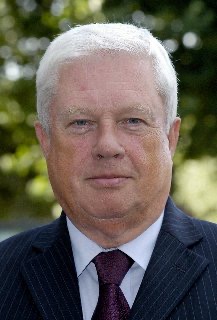
ROGER WATKINS recalls a fraught journey North which resulted in a job on the Daily Express and the start of a glittering career
Spotting Sam Prince in one of John Knill’s pix reminded me of the long, long January day in 1970 when I took my wife Carol and our two (then) toddlers to Manchester for a job interview with Sammy.
We set out from Bristol, where I was a sub on the Western Daily Press, in my white Mini. Carol had never been north of Birmingham and my knowledge of Manchester was non-existent. Suffice to say it was further than we had thought.
Anyway, we found the office and parked outside the Land O’Cakes. I went in for my interview at 2.50pm and was shown into an office, populated by Peter Welbourne I recall, to await the Great Interviewer’s return.
At 4.30 the front hall rang up to say my wife needed to move the car because rush-hour parking restrictions had started. I moved it around to Tib Street and dashed back to the “interview.”
Eventually I had a chat with Prince, all went well and I was asked whether I wanted to be a features or news sub (I chose the former). Then I was ushered into see John McDonald, who had obviously lunched well. He was given a piece of paper by Sammy with, presumably, a figure on it, and said something like: “Hello. is £36 all right?” And that was that.
At 6.10, as we pulled out of Tib Street ready to negotiate the Mancunian Way back to the M6, it started to snow!
I met some great characters at Ancoats but the one that sticks in my mind is Bill Fryer who wrote a regular column called Fryer’s Unforgettable People (mainly barmaids, I recall).
One day Bill approached Features Editor Ron Baker and said: "Did you get those Unforgettable People columns I left in your basket?”
“No Bill, who were they?”
“Dunno, I’ve forgotten.”
It wasn’t a joke.





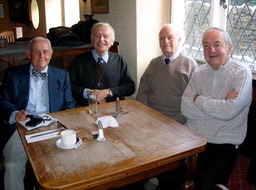
Our Drunken Drive to Didsbury

The old pictures from the great days of the Daily Express Manchester office have brought back happy memories for many. And they have inspired ALAN FRAME to write this hair-raising story.
THE pictures from Ancoats past are particularly nostalgic and remind me of three very happy years there from ’66-69.
But the one from the Jolly John Knill archive, containing on the far left, Bob Spence, brought to mind one particularly hairy drive home from the Express in the middle of the night.
Bob, pictured below right, was Night News Editor and had a 1948 Mark IV Jaguar 2.5 litre Drophead which he was selling. I hadn’t seen it but, being brought up with my father’s vintage cars and the like, I knew exactly what to expect.
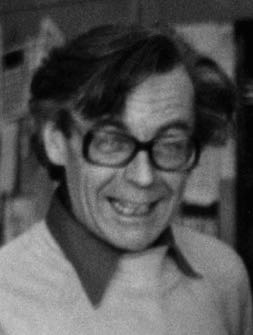
It wasn’t remotely pristine (aka a rust bucket) so after negotiations over a few pints in the Land o’ Cakes, Bob trousered my crisp fiver in return for the log book, original sales documents and leather-bound handbook. Bob was to drive to the office in the Jag the following day and hand me the keys, which he did with the warning that the brakes didn’t work. I assumed this meant that they needed a lot of prodding and eventually relining.
But Bob was a man of his literal word – as I discovered when after my shift in the subs’ room I set off, not to Didsbury where I shared a flat with other Express chums – the late great Rory Crilly, Dick Derwent and Ray Heath (also, sadly, the late great) – but to Salford where another of our number lived and who shall remain nameless, not to protect the innocent but because I’m having a bit of a senior moment.
It was about 1am and predictably damp as we headed out of Ancoats with my flatmates in various states of, er, tiredness, in the car. Nearing Piccadilly, the lights changed to red, which is precisely when I realised that if Bob says the brakes don’t work, he means exactly that. Fortunately traffic at that hour in those days was non-existent so we decided to push on very gingerly to Salford.
The trouble was, more drink was taken there and by the time we headed back to Didsbury, there was early morning traffic coming in the opposite direction, all of the drivers blissfully unaware that a 23-year-old drunken imbecile was driving towards them in a 21-year-old car that needed a week’s notice to stop. But it is amazing how useful a manual gearbox is as a means of braking and somehow we made our destination without killing anyone (including ourselves) or alerting the Greater Manchester Constabulary.
The Jag, brakes never repaired, remained parked in the garden of our flat until I moved six months later to the old Daily Sketch in London and to the embrace of David English.
I placed an advert in the Manchester Evening News and sold the car for, I think, marginally more than I paid Bob Spence. The buyer was an airline pilot based at Manchester Airport. So this lovely old car was at least going to a good home. Or so I thought until he explained that it would be placed in his garden to be used as an alternative to a tree house for his son and friends to play in.
That car today, assuming it has been fully restored and with functioning brakes, would sell for £65-80,000.
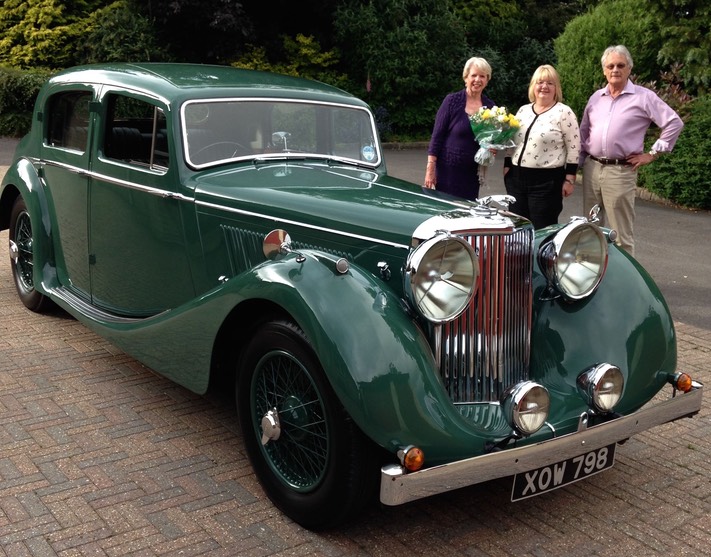
HOW IT COULD LOOK TODAY: A saloon version of the Mark IV Jaguar owned by Roger Watkins’ half-brother who is seen here with his partner Julie, centre, and Roger’s wife Carol
DRONE PHOTONEWS Our Friends in the North

FAREWELL CLAUDE: Manchester backbencher Claude Lescure, second left, receives a retirement tankard from northern editor John McDonald as, from left, Burt Howes, Ted Hodgson and Aubrey Mathews look on

FEZ FAIR: Bob Blake does a good impression of Tommy Cooper as he receives his retirement gift from northern editor Tony Fowler some time in the 1980s
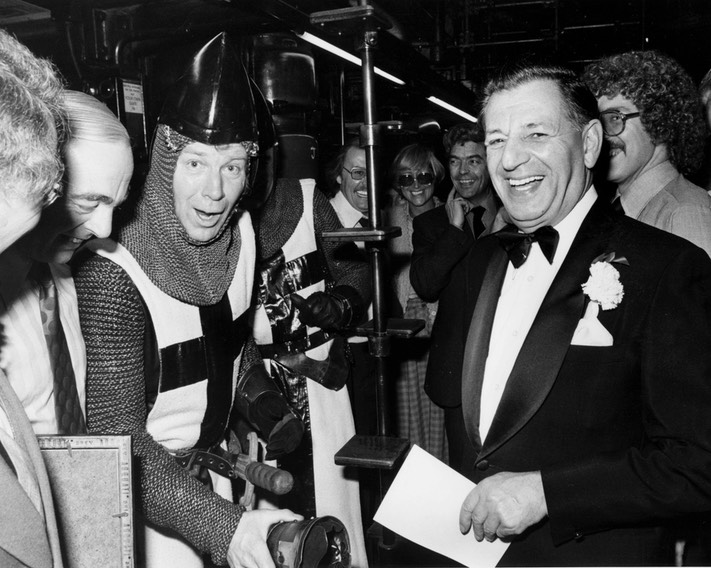
FINGERS IN THE PIE: Express chairman Victor Matthews starts the first run of the Daily Star in Manchester with a little help from Daily Express picture editor John Knill, dressed rather cheekily as a Crusader
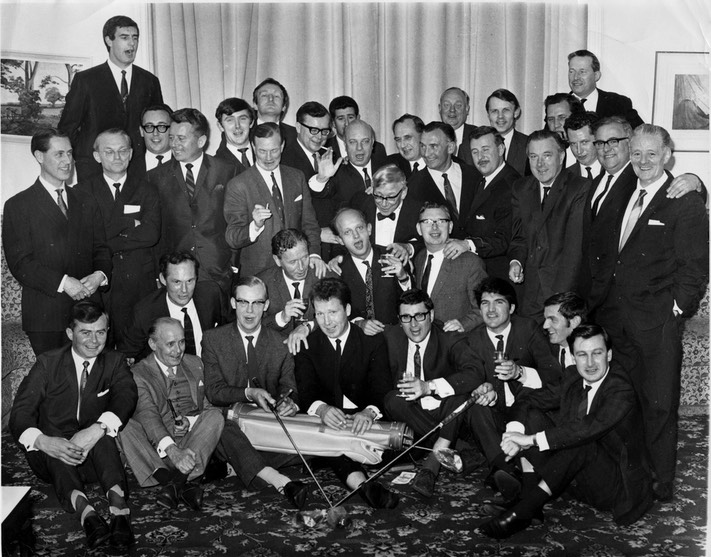
NORMAN’S CONQUEST: Manchester picture editor Norman Midgley, in light-coloured suit, sits on the floor with his retirement present, a golf bag. He is surrounded by photographers and editorial guests, including Sam Prince, Howard Bygrave, John McDonald, Bob Blake, Frank Spooner, Keith Howard and Cyril Ormiston. John Knill, who later became picture editor and who supplied these pictures, is seated in the centre. Pic dates from late 1970s

A TOUCH OF GLASS: Photographer Laurie Lea, crouching centre in specs, fag in hand, retires and joining in the celebrations are, from left, Jack Kay, Martin Gilfeather, Laurie Lea, Norman Midgley, Aubrey Mathews, Frank Spooner, Robin Esser, Friendly Policeman, Peter Jackson, John Dawes and John Knill. Picture was taken in the late 1970s. Probably.
Esther Pushes the Boat Out

TYING THE KNOT: ‘Vintage bride’ Esther Harrod and her long-term partner Steve
Esther Harrod, an editorial secretary on the Daily Express from 1973 to 1985, is getting married again. Describing herself as a “vintage bride”, Esther has decided to tie the knot after 14 years with her partner Steve.
They live in a riverside village 12 miles from Cambridge and will celebrate their marriage in June with more than 100 friends and family.
Steve, 61, a parish councillor whom Esther describes as her toy boy, worked as a design engineer for a telecommunications company until his retirement.
Esther, 63, said: “We are lucky enough to have a very nice boat and as our village church is situated on the banks of the Great Ouse, Steve thought it would be a nice idea for me to come down on the Jasmine B with my three (also vintage) bridesmaids.
"I just hope I don’t fall into the river at the same spot, which I nearly did about three years ago when I was a river novice. I’ll have to make sure I don’t buy a dress with a train that I could catch my heel in and go over."
Esther, nee Gates, and two of her bridesmaids enjoyed a hen cruise on Cunard’s Queen Victoria in January although she is not sure if the passengers were ready for such an event.
“It was truly a privilege to be able to spend quality time with friends who I have known since the late 60’s, when as young women, we shared a flat together next to the Bull and Bush in Hampstead,” she said.
Also on the ship was Falklands veteran Simon Weston, who was one of the speakers on the first leg of the Queen Victoria’s World Cruise. Esther said: “I was overwhelmed that Simon was on board as I had been the person to break his story when he arrived at the Queen Elizabeth Military Hospital in Woolwich.
“My late husband had come back from the pub, telling me that someone had been visiting a relative in the hospital round the corner from us and there were 'blokes in there from the Sir Galahad, one of which was very very badly burnt, with fingers dripping like candle wax’.
“I went into the office the next morning and told the newsdesk. I remember photographer Harry Dempster going to the hospital and coming back saying that Simon was so badly burnt, he didn’t want to take any photos. But of course he did and the rest is history."
“I spoke to Simon after his talk and said I had broken the story to the press and that I had felt guilty because I had often wondered if it had been too early for him to be exposed in that way. But being the gentleman he is Simon said he couldn’t even remember at the time. Him and the lads were just pleased they had more visitors as they were getting bored sitting around in the hospital. The Express did send them in a few crates of beer as I recall.”
Esther’s first husband Barry died at the age of 52.
Esther’s life on the Express – Pictures
Where are they now? John Knill
JOHN KNILL, star photographer and former picture editor of the Daily Express in Manchester, remembers the great days. His cheerful countenance earned him the nickname Jolly John.

John is now retired, after working in newspapers for nearly all his life.
He writes in what he calls a 'selfie’ for the Drone: I started on the Stockport Advertiser and then spent 28 years with the Daily Express, starting as a photographer and then becoming the Picture Editor in Manchester for 23 years.
Ten years with the Manchester Evening News and various freelancing escapades kept me occupied until I retired at 65.
Life on the Express, which I joined in 1960, was fascinating and hectic at times. During my snapper years I photographed many famous and well-known people, including members of the Royal Family, the Queen Mum being one of my favourites. Others included President Kennedy, The Beatles, Churchill, Noel Coward, Cliff Richard, Margot Fonteyn and Nureyev, Morecambe and Wise, Liz Taylor and Richard Burton.
I managed also to visit Germany, Italy, Czechoslovakia and Malta on mainly sporting jobs.
My years on the Picture Desk were also very interesting and could be very nerve racking and rewarding at the same time in looking for that exclusive coverage and picture. One of the biggest moments was getting the first pictures of the Moon taken from a Russian Space Vehicle via a Jodrell Bank telescope.
Other missions not quite impossible were to organise picture coverage of such events as the Troubles in Ireland, the Investiture of the Prince of Wales, the papal visit to Ireland, Liverpool and Manchester, the Moors murders, the Woolworths fire, the Ripper murders, the two big Manchester air crashes, the sinking of the oil rig Sea Gem, the fatal water speed attempt of Donald Campbell, and the assassination of Lord Mountbatten.
There were lots and lots of other stories that had to be covered, but many are now lost in the mists of time.
DRONE PHOTONEWS The Old Days in Manchester
Former Express photographer JOHN KNILL has been delving in his picture archive to find these atmospheric shots from the old days

FRIENDS IN THE NORTH: Drink had clearly been taken when Daily Express photographers and their guests gathered in the 1960s. Among the revellers are Glasgow picture editor Albert Barr with his arms aloft; editor Arthur Brittenden; and London art editor Chris Hagen

ANCOATS CHUMS: News Editor Stanley Blenkinsop (in suit), Paul Berra (seated) with, from left, Bob Spence, Jean Kershaw (newsdesk secretary), John Alley, Jolly John Knill, Carol Newton and Vernon Winterbotham

HARD AT WORK: Legendary news editor Bob Blake, whose acid wit was was felt by many a young reporter who later found fame and fortune in London. These included Paul Dacre, Ann Leslie, John Hampshire, Geoffrey Levy, Norman Luck, Barrie Devney, Colin Pratt, Paul Ecclestone, Frank Robson, Phil Finn and many more

LUNCHTIME LEGENDS: Blenkinsop (note the monocle) and Blake in retirement, circa 2005

COCKTAIL TIME: Manchester News Editor Tom Campbell with Keith Howard and secretary Jean Kershaw in the early 1960s
